


Tariffs are certainly a big topic these days, and rightfully so. The big question is whether tariffs will cause inflation or not. We are going to explore, noting that this is just my opinion, so take it for what it’s worth.
If tariffs were to stick at current levels, I think they would be marginally inflationary. Why do I say that? I think that largely those price increases would be offset by slower growth and more unemployment (a recession). At these levels, there is no way that tariffs as a whole are good for the global economy or the US economy. That’s not to say that some rebalancing in the global economy is not necessary, but my opinion is that there is a better way to do it. Would those other ways be doable? Don’t know. Not to mention it’s way above my pay grade to make those decisions.
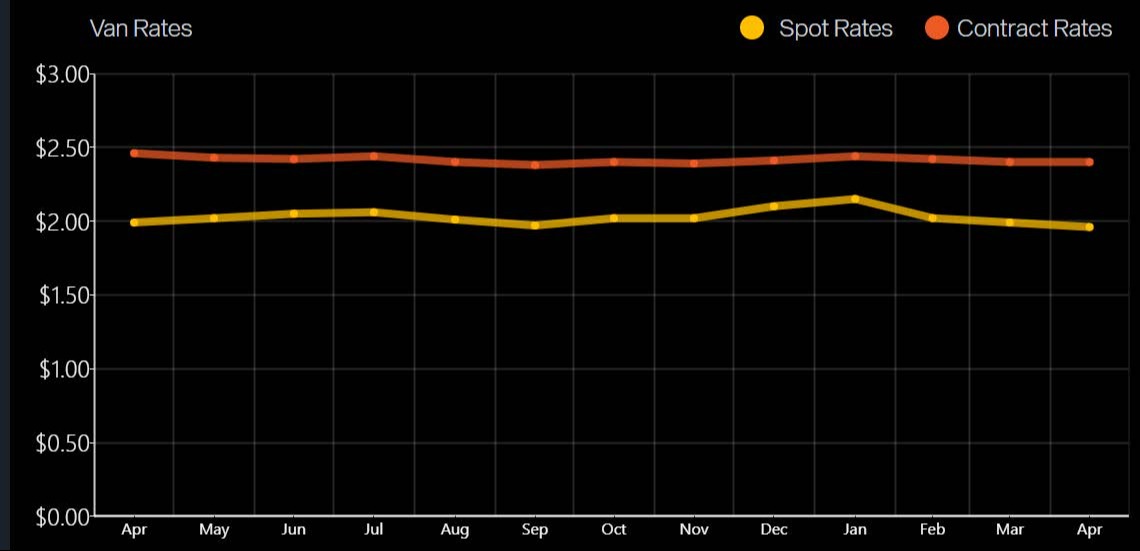
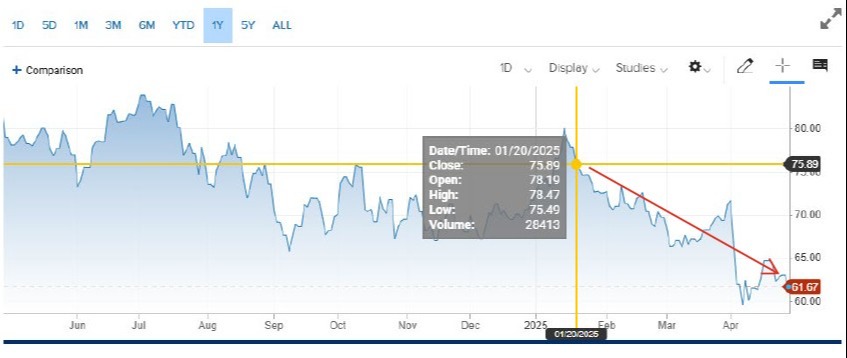
Part of the offset in prices already has been the cost of energy. Since the inauguration the price of crude oil has dropped significantly – down almost 20%. That’s a “tax” reduction for everyone who needs to fill their cars, fill their oil tanks at their house, or many other input costs for many of our products. Speaking of input costs, trucking costs have come down a bit, partially because of fuel costs. Coming down from $2.15 to $1.96 spot price.
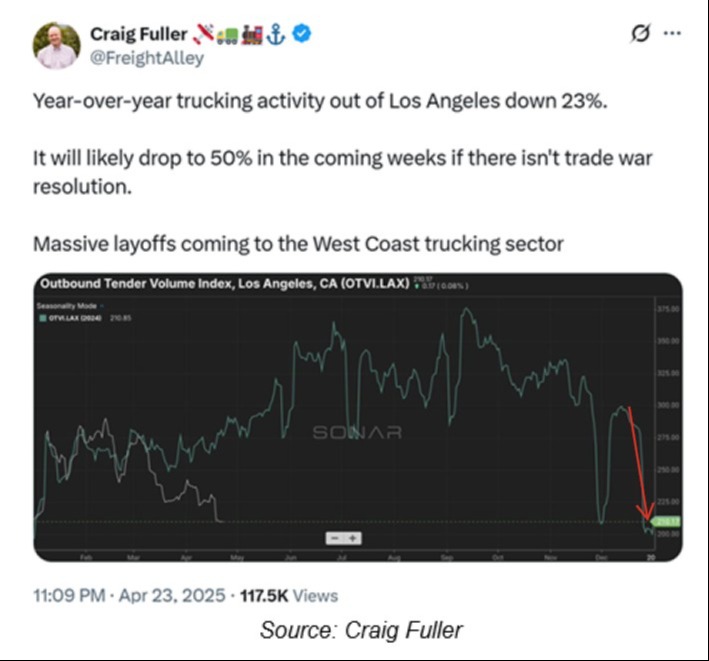
Live tracking by Freightwaves is seeing volume at West Coast ports down significantly, and potentially more if the tariffs go on for a while longer.
Here’s the chart of what gas prices have done since inauguration day, though they may soon be climbing here in Washington if the governor signs off on recent legislation to hike the gas tax by 6 cents a gallon.
Again, I don’t think it would ultimately be great to have tariffs remain at current levels. If they are ultimately renegotiated to a lower level, that’s a plus. Zero tariffs would be best, but I don’t know if many countries are ready to do that.
So, we’ve had a rebound in the markets over the last week or so. Enough to trigger a “Marty Zweig breadth thrust.” A whosawhatsit?
It’s basically when 90% of stocks are up and it usually takes two days in a relatively short period of time for this to trigger. Well, it triggered on the 24th (last Thursday), setting the finance folks on Twitter ablaze with excitement. Here’s what has historically happened after the Zweig breadth thrust has triggered.
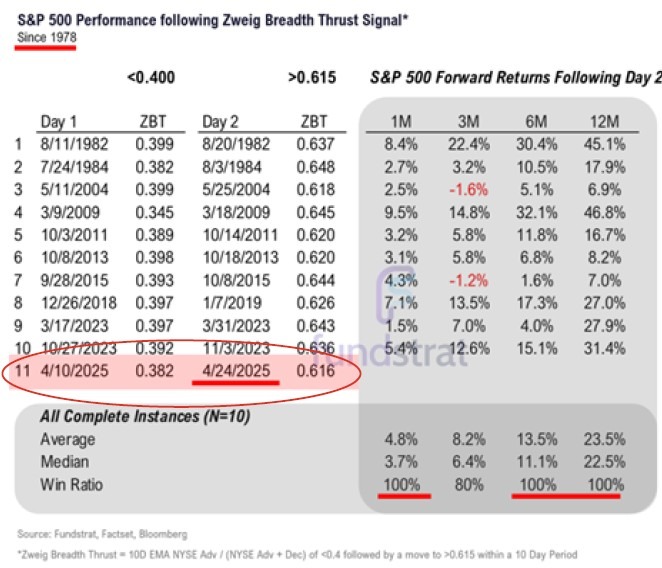
You can see that although the 3-month period of time is at 80%, all the other periods above are 100% of the time (positive returns). Will that happen this time? We don’t know, but going by history, we have a pretty good chance it will. Many of these periods have come after prolonged bear markets, but some haven’t, like two of them in 2023.
We have been talking about “green shoots” over the last month plus. This is a huge confirmation that those green shoots will turn into full blown plants! With one caveat. If those tariffs continue and push the economy into more of a recession than currently anticipated, that would cause those green shoots to “freeze” over.
If many of these tariffs are wrapped up in the next month or two, it wouldn’t surprise me to see our money flow data turn positive, which should harbinger better markets going forward. Remember, the markets look out 6 to 9 months. Is it possible that the markets are projecting much higher share prices by the end of the year? We don’t have confirmation yet, but we are expecting further evidence in the not-too-distant future.
If you have any questions or are losing any sleep, please reach out and we will be happy to have a conversation.