


It’s been a couple weeks since I wrote a blog. Last Monday was President’s Day, and the previous week I was on “vacation.” Seven days in a beautiful paradise…40 mph winds, rain, and 24 hours without power. I know…sounds more like a staycation in Mukilteo. Nope, I did my annual trip to Maui and half the week (aside from being in the upper 70s) was much like being home. The second half was very nice and I think I got a little color. Back home and the news didn’t stop just because I’m away.
Late Friday, after the markets had closed, the Supreme Court ruled against the Trump administration regarding Tariffs. As Chief Justice Roberts wrote –
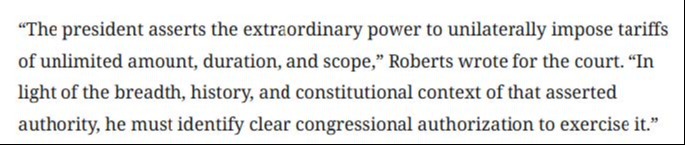
He further wrote –
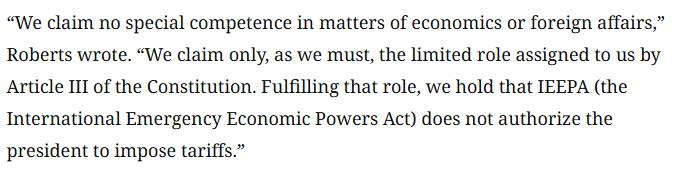
The Supreme Court didn’t say what should be done with that money, but already companies and states are lining up for their refunds. I might slow the roll a bit on that, as there are still many avenues Trump can still use tariffs. Keep in mind, this is just the IEEPA. Here are the other rules, laws, or statutes that can be used.
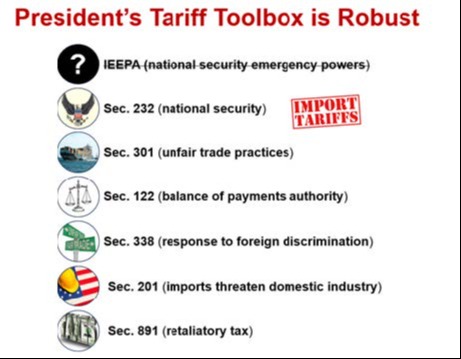
And in true form, Trump has moved to impose tariffs of up to 15%. Based on what you ask? Good question.

This allows the president to impose tariffs for 150 days, then Congress would have to approve any extension. I think the likelihood of that is zero.
But you can see he has many other levers to pull, and I would expect that he would use many, if not all, to reach his goals.
This sort of segues into my next topic. That of our model. Earlier this month, our model went “risk-off,” aka more conservative or defensive. It doesn’t mean we’re either all out or all in the “stock market.” It simply means there are degrees to which we will take risk given your specific risk tolerance and what’s going on in the world (and what our model is picking up on).
When our model goes “risk-off” it usually means that, at a minimum, we are in for a period of higher volatility. Sometimes that volatility will translate to lower stock prices. We know that each of us only really cares about “downside” volatility. Nobody cares if the markets go way up, just way down.
The last time the model went “risk-off” was prior to and during the last tariff tantrum and when the market was down 20%, our models were down 1/3 to 1/2 that much (depending on risk tolerance). And now, like clockwork, our model is saying to be careful and expect volatility. Let’s see how that’s going so far.
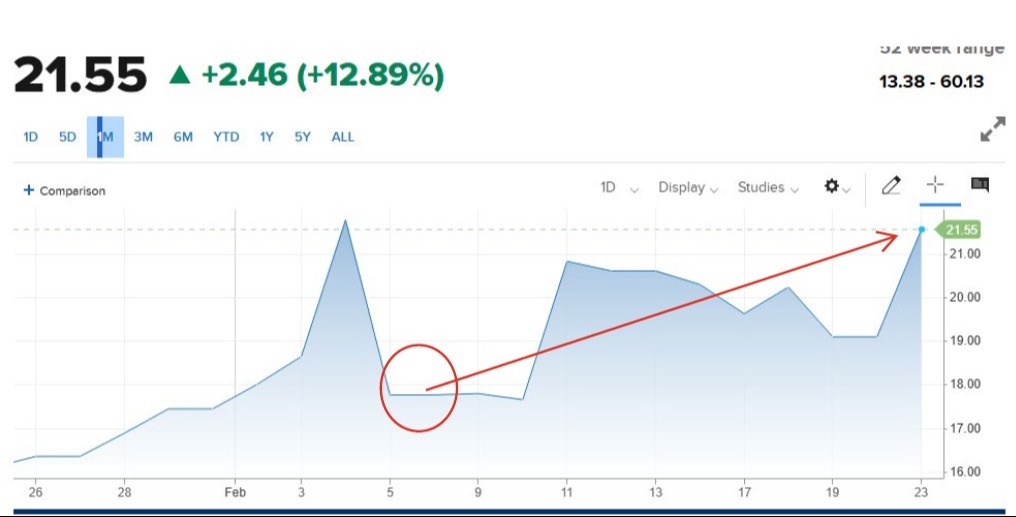
We went risk-off on February 6th. Since then, volatility has gone up roughly 30%. Will it go up further? Tough to say, but our indicators would expect that. Given the tariff issue, volatility has already spiked based on that.
So, what specifically does being “risk-off” mean? It currently translates to owning less Tech stocks, less consumer discretionary stocks (more economically sensitive), and largely less “market cap” weighted S&P 500 exposure. It means owning more utilities and consumer staples (less economically sensitive). Things that will go down less in down markets, if history is any indicator – thus helping us to compound money more effectively.
The entire point of the model is to keep you invested (though more conservatively) in bad times, so that you don’t throw in the towel when things get uncomfortable. The wheels always fall off the proverbial bus when the market is down. Our goal is to make sure any “bus crash” isn’t catastrophic and when the market turns around (which it will), you are still emotionally able to move forward.
Now, we haven’t had a market like that for a long time, but is this the start of the next one? I don’t think so, but you don’t know until after the fact. Until we know, we will continue to follow our model and remain conservative and see how this plays out.
I hope you have a good week. If you have any questions or comments about this or any other topic. We will certainly be happy to have a conversation. Oh, and welcome back Seattle Mariners baseball! Now there’s a stock that’s trending up!