


The war still simmers in Iran, and the Strait of Hormuz is not really opened up again. The latest count is around 5% of the ships are getting through currently. That has kept the price of oil high, which of course has kept the price of fuel high (amongst other key input costs). Many of the derivatives like fertilizer are both high priced and supply constrained.
The national average for unleaded is now $4.515 a gallon, according to AAA, up from $4.058 a month ago. Diesel is now $5.631 a gallon versus $5.57 a month ago. Of course, the West Coast is the most expensive gas in the country. Here’s a case where the “Best Coast” moniker doesn’t apply!
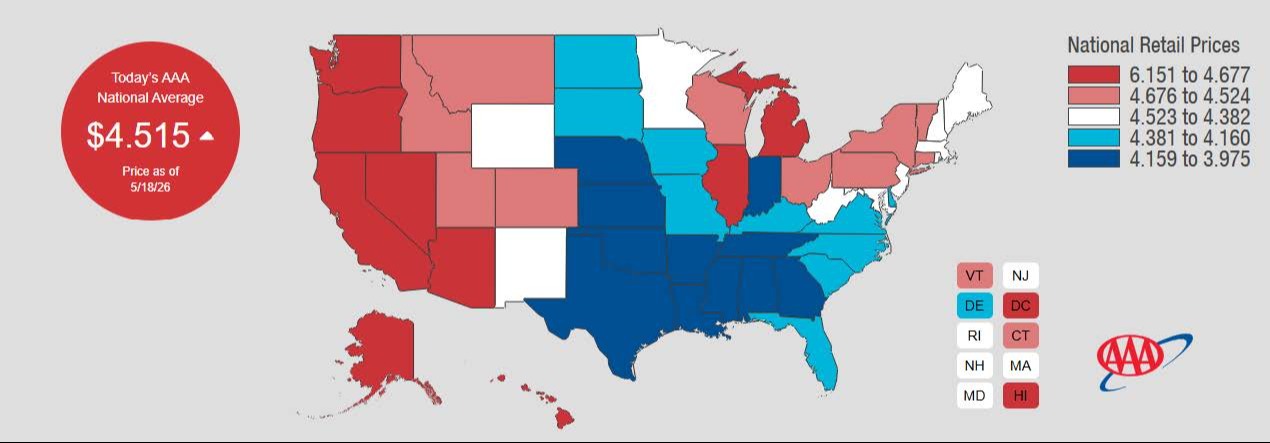
That has largely pushed inflation to its highest level in several months. Last week, PPI – the “wholesale” inflation – was up 1.4% in April, while the CPI “retail” inflation was up 0.6% for April.
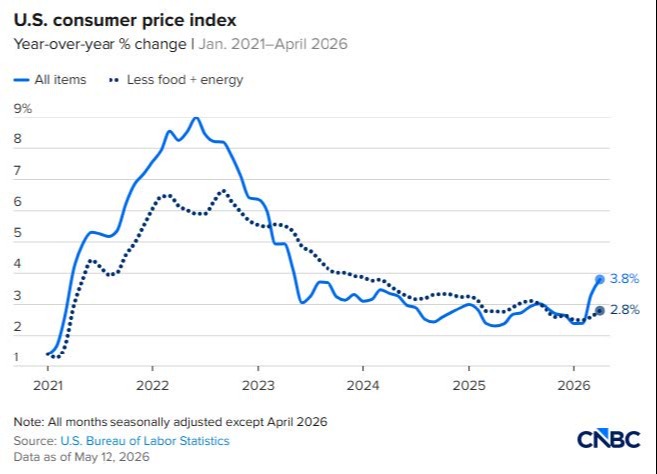
Much of the inflation is outside of the “core” inflation which excludes food and energy. Here’s a chart of how that looks.
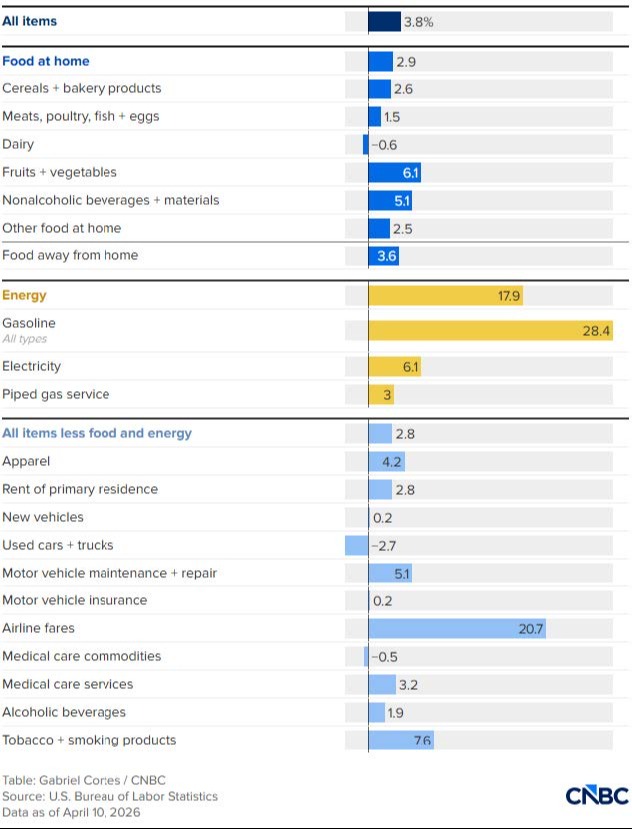
Besides energy, you can see that airline fares went up a lot, but most of that is due to airline fuel prices climbing while demand is seemingly not abating.
Here’s a chart of oil prices over the last year.
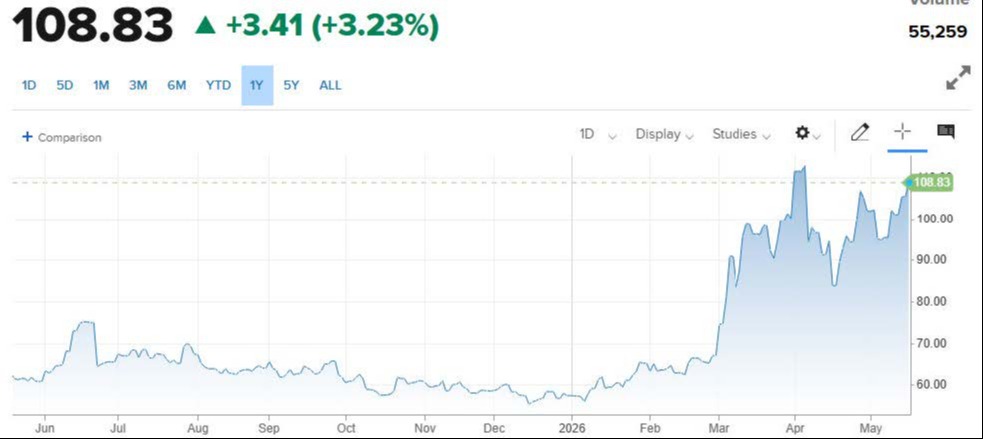
When will we see this come down? I think that’s up to the conflict in the Middle East and the flow of oil through the Strait.
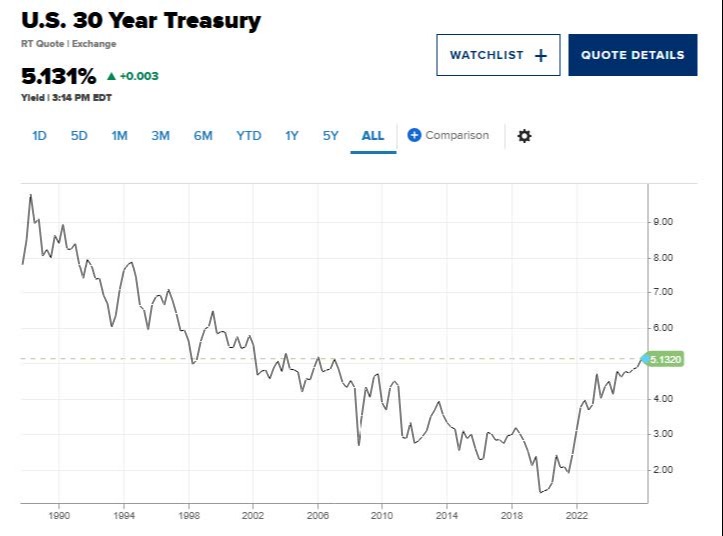
With the inflation numbers like they are, 30-year Treasury rates have climbed to the highest level in almost 20 years.
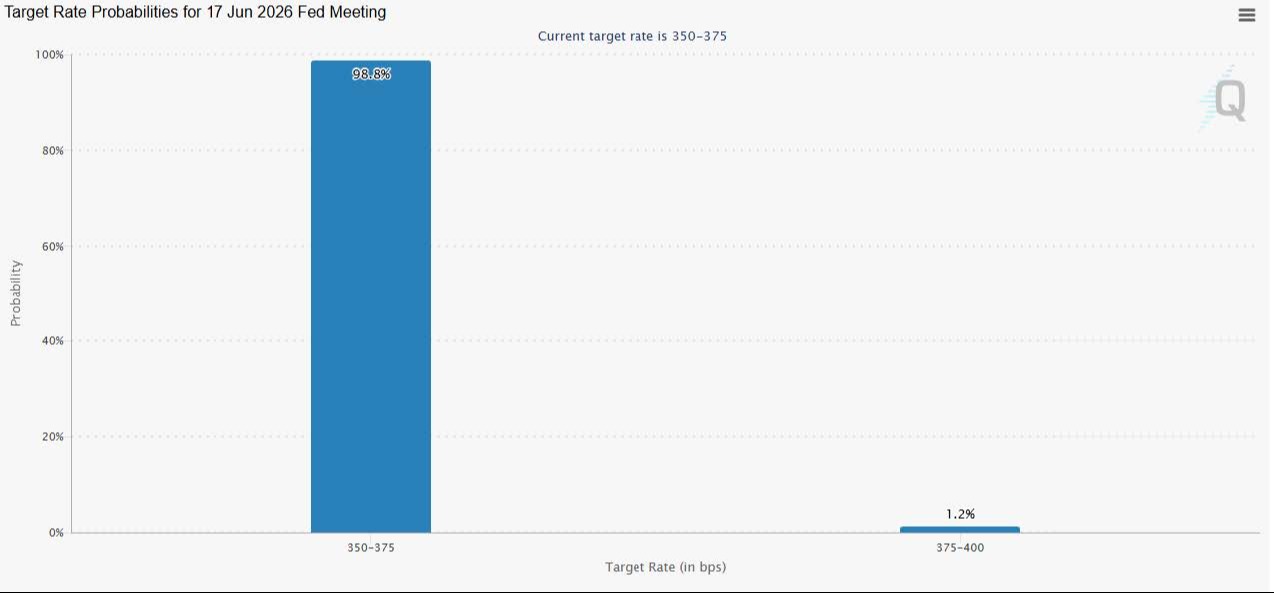
Higher rates will likely cause new FED Chair Kevin Warsh (newly confirmed by a 54-46 vote), to possibly raise interest rates, though the futures markets aren’t pricing that in yet. That’s a notable shift from what the market has been forecasting over the past few months.
But what it is likely to cause is higher interest payments on our bloated national debt. I was reading some research early this morning and some things caught my eye. The Federal government borrowed $1.7 trillion in the 12 months ending April 2026. The CBO (Congressional Budget Office) projects $16.2 trillion in net interest payments over the next decade. For those not doing the math, that’s an average of $1.62 trillion per year. Closing in on 40% of the government’s total budget. That’s without recessions or more pandemics factored in either.
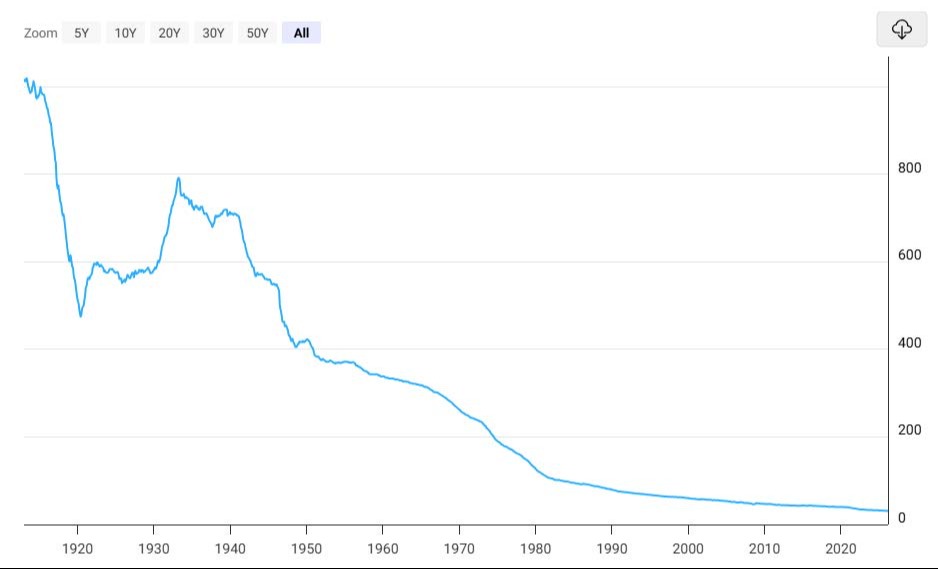
Lastly, our good friends at First Trust sent out an email that brought up the Federal Reserve. I’m not going to complain about the Fed. I just want to lay out a couple of facts. According to their research, between 1800 and 1900, the dollar’s purchasing power stayed the same or slightly higher. Since the FED was introduced in 1913, inflation has been a cumulative of 3,297%. Below is the value of the dollar since 1913.
The Federal Government only has three ways to address the total debt that we have accumulated. Cut spending, raise taxes, or inflate our way out of the debt. Which do you think it is?
That’s it for this week, I hope you have a good week. If you have any questions or comments about this or any other topic. We will certainly be happy to have a conversation.